Biomarker Basics: Cervical Fluid
Start here if you want to know more about cervical fluid, how to make tissue observations, and charting vaginal sensation. Most methods include cervical fluid as the main biomarker, but they don’t all use the same instructions for how to observe or chart it. I’ll let you know how different methods use these ways of observing.
becoming aware
Think about how your mouth feels. Does it mouth feel comfortably damp? Does it feel dry? Where do you feel that? Around your teeth, the roof of your mouth, on your tongue or lips, in your throat? You can tell how your mouth feels - if it feels moist or dry like you need to drink something urgently. The thought of your favorite meal can start it watering. And in the cold or when you’ve been crying, you know instantly if your nose starts to run, even a little drop, and you know well before someone else would notice.
It’s kinda normal to talk about the moisture (mucus) in our mouths and noses. But our vaginas and vulvas are not something we’re taught to be aware of in the same way. Although it usually takes more mindfulness to learn, it’s still possible!
The cervical fluid biomarker is a foundational part of most fertility awareness methods. In this post, you’ll learn the basics of how to observe and classify cervical fluid, but it won’t teach you how to use this to achieve or avoid pregnancy. I’d love to chat with you about learning a fertility awareness method.
cycle hormones and the cervix
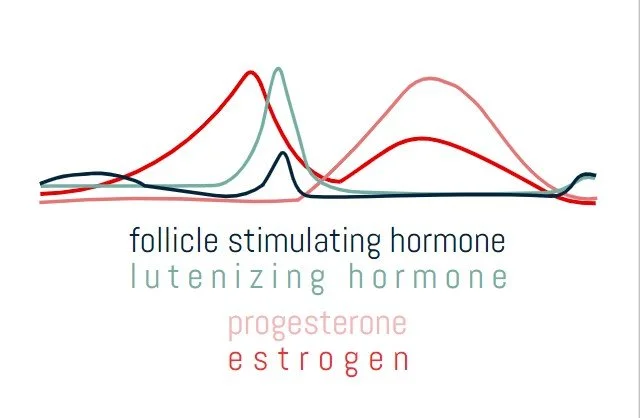
At the beginning of your cycle during your period is when hormones are at the lowest levels. The body isn’t producing any significant amount until later when the follicles start to grow. Then, estrogen starts to rise as the ovaries prepare for ovulation. After ovulation, estrogen falls off quickly, and progesterone rises to become the dominant hormone. Estrogen does rise a bit during this phase too, but it doesn’t reach levels anywhere near that of progesterone. About a week after ovulation, if no fertilized egg is present, progesterone and estrogen slowly drop off until they reach very low levels again. Then a new cycle begins.
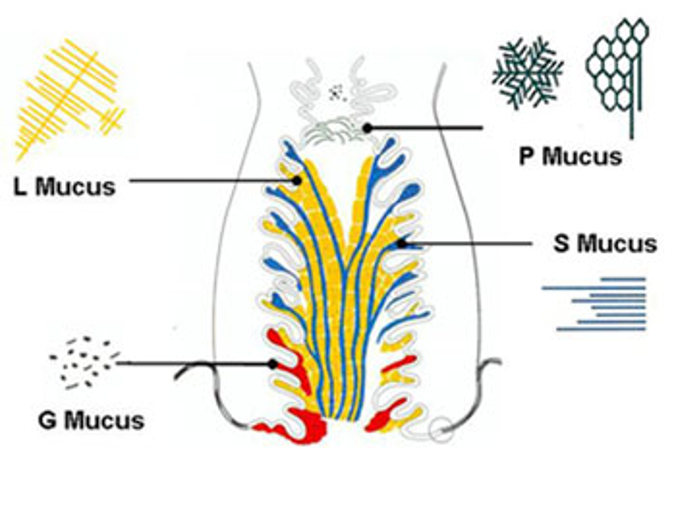
Types of Cervical Crypts (diagram). East Burwood Victoria. Billings LIFE. [accessed 7 June 2022] https://www.billings.life/en/for-health-professionals-2/the-cervix.html
The cervix responds to these hormonal fluctuations in several ways. It can change position, texture, and openness, as well as produce different types of cervical fluid.
Cervical fluid is made by cells that line the cervical crypts. Different crypts are stimulated by the different hormones. When progesterone is the dominant hormone, G crypts are stimulated to produce G mucus. (G for “gestogenic” or “promoting gestation” = supporting potential pregnancy.) Estrogen stimulates the L and S crypts as it rises to produce EL and ES mucus.
The stimulation on these crypts gradually rises and falls with the hormones, so their workdays overlap. Almost any time you observe cervical fluid, you are really seeing a mixture of multiple kinds. You’ll categorize it based on its most estrogenic properties. More on that below.
vaginal sensation
One way to observe cervical mucus is by noticing the sensations felt inside the vagina and at the lips of the vulva. It is commonly called walking sensation too. Have you ever been walking around and felt like you just started your period out of nowhere? Then you grab a pad and run to the bathroom to find no blood whatsoever. That is cervical fluid.
You can make these observations by going about business as normal and tuning into what you feel. It might help to wear loose-fitting bottoms and natural fiber underwear and to be aware of the hygiene products you use that might make it difficult to notice sensations.
Try to find a single word or two to describe each new sensation. Here are some examples of what you might notice and how to classify each. These are somewhat loose categories that aren’t used by all fertility awareness methods. Learn your own patterns by charting your sensations for several cycles, and work with a Fertility Awareness Educator for more guidance.
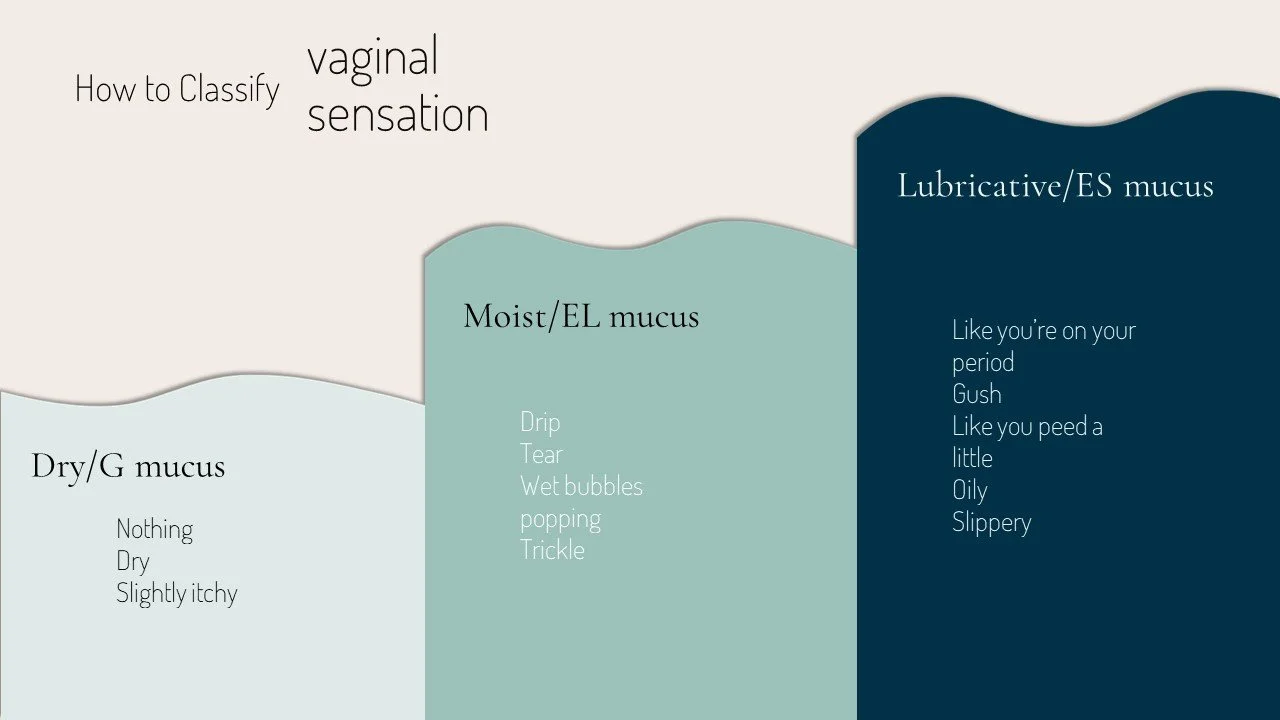
These are not strict categories, but can be helpful when beginning to chart your patterns.
FAMs that include vaginal sensation
Not all fertility awareness or natural family planning methods include vaginal sensation.
SymptoPro includes both vaginal sensation and tissue observations (discussed next), and both are weighted equally when determining phases of fertility.
The Billings Ovulation Method is a sensation-only method that does not require other types of observations or biomarkers.
Most other methods of fertility awareness will acknowledge that vaginal sensations can be observed, but they don’t teach them explicitly or use them as a main way of observing cervical fluid.
There are two points I want to make before I let you move on.
First, and according to the SymptoPro handbook, people can notice a microscopic amount of cervical fluid just by a sensation - an amount that wouldn’t even be possible to notice visually on the tissue. Some people think they don’t have any mucus just because they don’t see any (me when I first started charting). A method of fertility awareness that includes vaginal or walking sensation is likely what they need if they want to continue with this kind of natural birth control.
Second, a healthy cycle has 5-6 days of obvious cervical fluid leading up to ovulation. This means if you don’t see any fluid and you only have vaginal sensations, your cycles might be telling you that something is wrong. If you’d like to learn more about cycle health, reach out to me or another fertility awareness instructor. We can help you understand the health of your cycle and guide you to get support from a knowledgeable medical professional.
tissue observations
The most common way to observe cervical fluid is to wipe before and after using the bathroom and intentionally notice the feeling and what remains on the toilet paper. Do this every time you use the bathroom throughout the day.
To start making this observation, fold toilet paper so that it has a flat, smooth surface. I suggest wiping before and after for the most thorough data collection. Bearing down while using the restroom could push fluid out, which can lead to two possible outcomes. 1) It may leave the vulva before you have the chance to notice it or 2) it may move down to the vulva so that you are able to notice it with the second wipe. It’s a good idea to get to know your body and patterns before refining how you make this observation. Notice the feeling of wiping. Dry, moist, slippery? Then look at the toilet paper to see if anything is there. If there is, notice the color, texture, and abundance. Three important characteristics of cervical fluid are if/how much it stretches, if there is a slippery wiping sensation, and if it is see-through. Pick up what you see and check these qualities between your fingers.
Again, describe what you see in as few words as possible. Keeping it simple and consistent will help you recognize patterns as you look back through your charting. Here you see some examples of observations and how they might be categorized and charted.
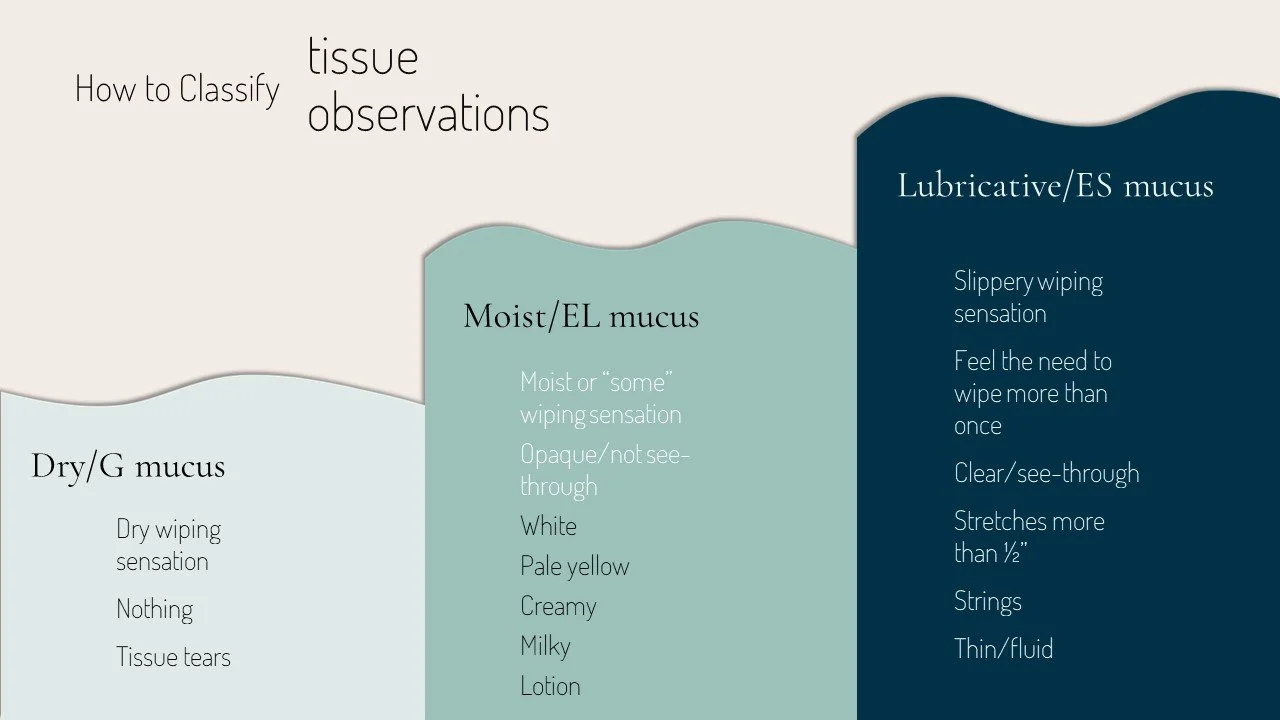
These are not strict categories, but can be helpful when beginning to chart your patterns.
FAMs that include tissue observations
I am not quite going to go so far as to say “all” here. But almost all fertility awareness methods or natural family planning methods teach this type of cervical mucus observation. SymptPro, FEMM, Justisse, The Well, Taking Charge of Your Fertility, Couple to Couple League, Creighton Model. This isn’t an exhaustive list. Again, the Billings Method of Ovulation emphasizes that you should note something if you notice it on the tissue, but you don’t have to look for it - so they don’t require tissue observations.
cervical fluid matters
Charting cervical fluid gives you a LOT of information about what’s going on in your body. The ovulatory cycle is actually a vital sign. By taking a look at a completed chart you can get a picture of the health of the reproductive system and your overall health.
The reproductive system is controlled by hormones, which travel through the blood and connect each part of your body together to keep it working as a whole unit instead of separate systems. Since estrogen and progesterone cause the production of cervical fluid AND support other body systems, cervical fluid is a good indicator of hormonal sufficiency.
Cervical mucus is the best biomarker to gain real-time info as to what your hormones are doing. You can know on a daily basis your chance of becoming pregnant. This is why it is a huge part of the effectiveness of many fertility awareness methods used for family planning. It’s also a great starting point to assess if your body is healthy and ready to conceive if that is your goal.
I have found personally and heard many stories of the power of cycle charting as a tool to connect so deeply with your own body. Maybe you want to have a thorough, consistent charting practice or maybe you only want to observe your fluid every now to see what’s going on in the moment, to connect to your body, your cycles, and to recognize that your body is taking care of you. It’s providing a natural ebb and flow. Observing cervical fluid in whatever manner and capacity you choose is a mindfulness practice that may bring you to love and appreciate this body that’s yours.
-Michaela